
Intro to Collage
Collage describes both the technique and the resulting work of art in which pieces of paper, photographs, fabric and other ephemera are arranged and stuck down onto a supporting surface. —Tate Modern
With a few basic materials, anyone can make a collage. It’s one of the most affordable, accessible art forms—and a great place to start if you want more creativity in your life. Collage can also be done digitally with a bit of imagination using tools like Canva and Adobe Express.
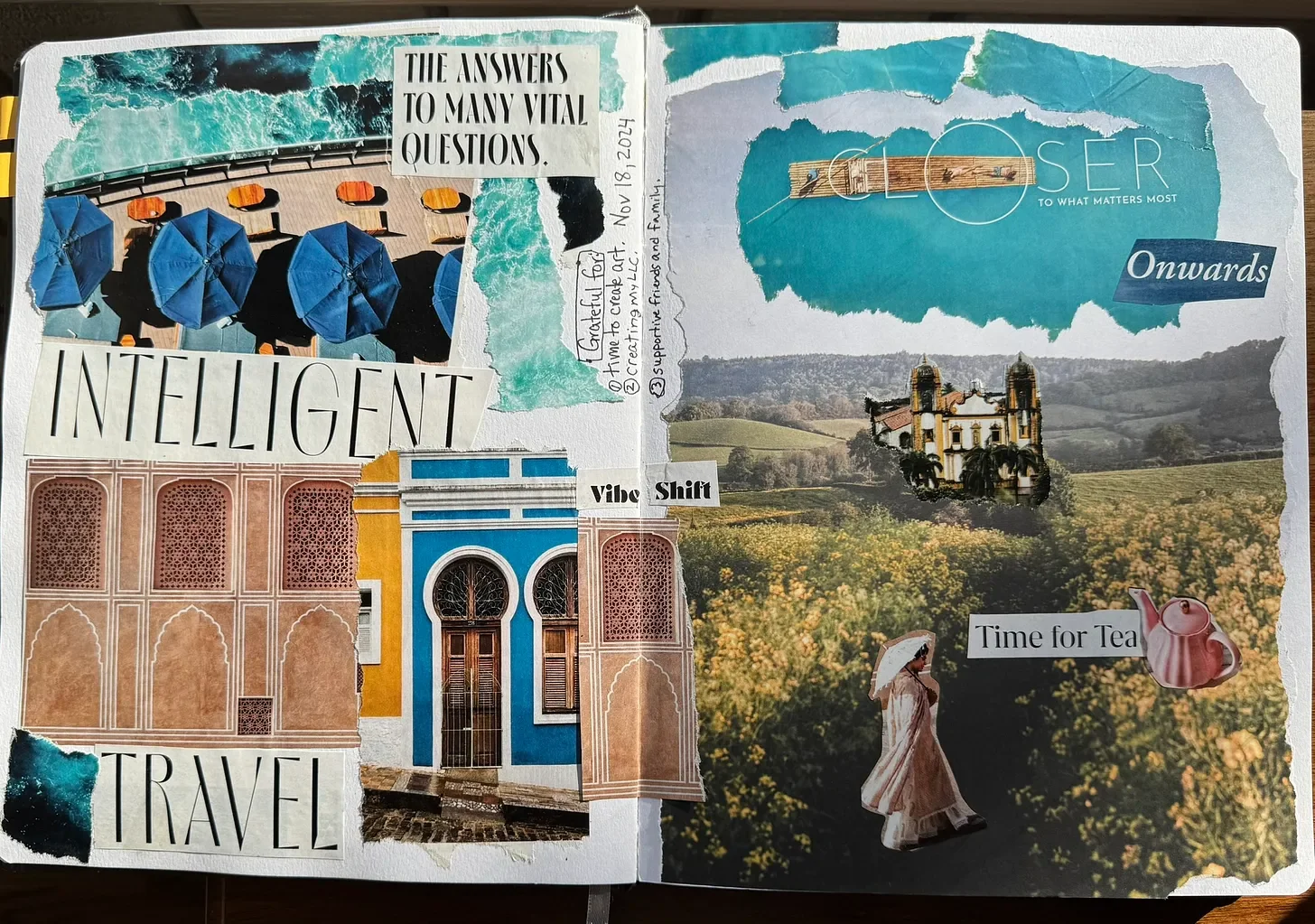
Collage 101
I started making collages in elementary school with paper, scissors, and glue. The basics haven’t changed. Here’s what you need.
1. Substrate (Your Base)
What will you collage on? Your surface informs the materials you choose. Thicker bases keep their shape and can handle wet layers. I use a mixed media journal in my daily art practice.
Common substrates:
paper, sketchbook, cardboard, wood panel, canvas
Starting with free or low-cost substrates keeps things low-stakes and makes experimentation easier. You might also like to try paper grocery bag, composition notebook, or junk mail. Most of all use materials you enjoy. Don’t save “the good supplies” for later.
2. Paper and Ephemera
ephemera: items (such as posters, broadsides, and tickets) originally meant to be discarded after use but that later become collectibles—Merriam Webster
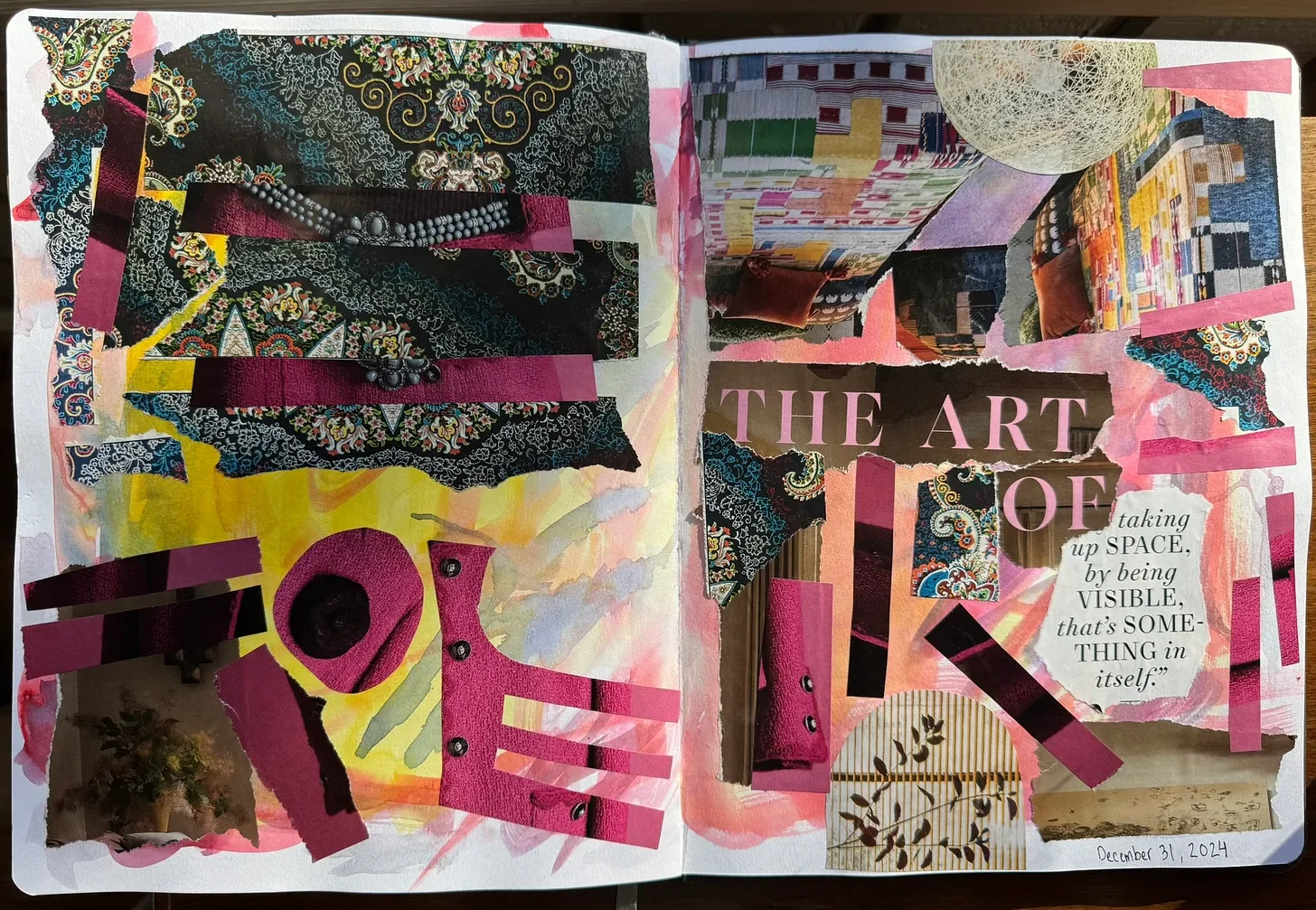
Choose images, colors, words, and textures that speak to you. In the collage above, I was drawn to rich jewel tones, texture, and pattern. I had painted watercolor underneath and didn’t love it—so I covered it. I don’t tear out sketchbook pages—I transform them. Collage is a great way to turn a meh page into something fun.
The image below was made by my kiddo using stickers, book pages, magazines, and junk mail. The substrate is a two-page magazine spread. The most expensive item? The “You’re Beautiful” sticker at the bottom.
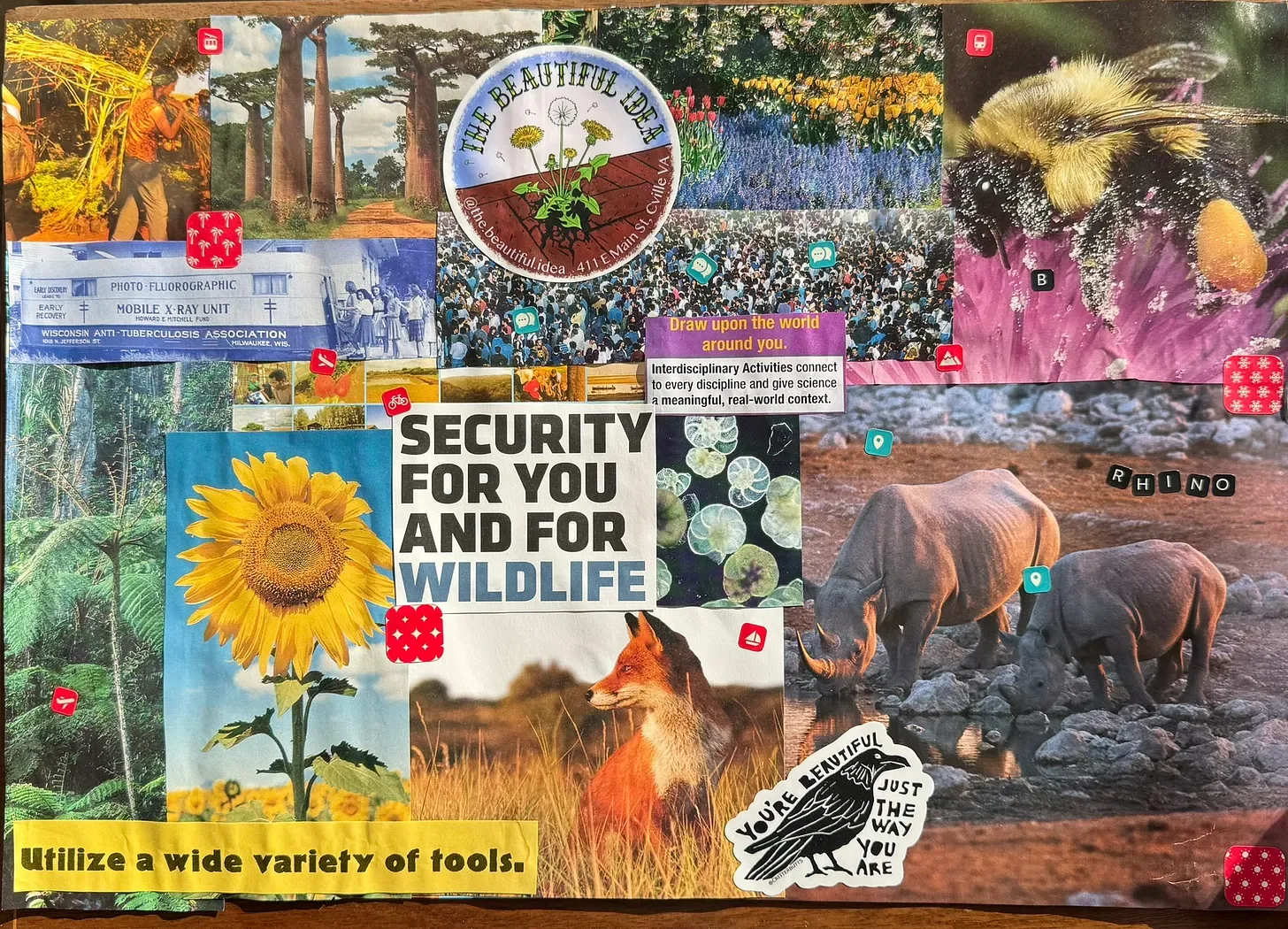
Sometimes our art says something notable by the time we are done. Created by Jean M.
If you can stick it down, you can probably collage with it.
Try vintage papers, ribbon, tissue paper, washi tape, scrapbooking papers, and stickers. I source most materials for free: discarded books, neighbor magazines, junk mail, wrapping paper, and clean food packaging.
Search terms for more ideas: collage, junk journaling, art journaling
3. Adhesive
You’ll need something to attach your pieces.
Common Supplies: glue stick, PVA glue, matte medium, gel medium, rubber cement, double-sided tape, washi tape, glue pens
Each adhesive has a different feel and best way to use—experiment if collage becomes a favorite.
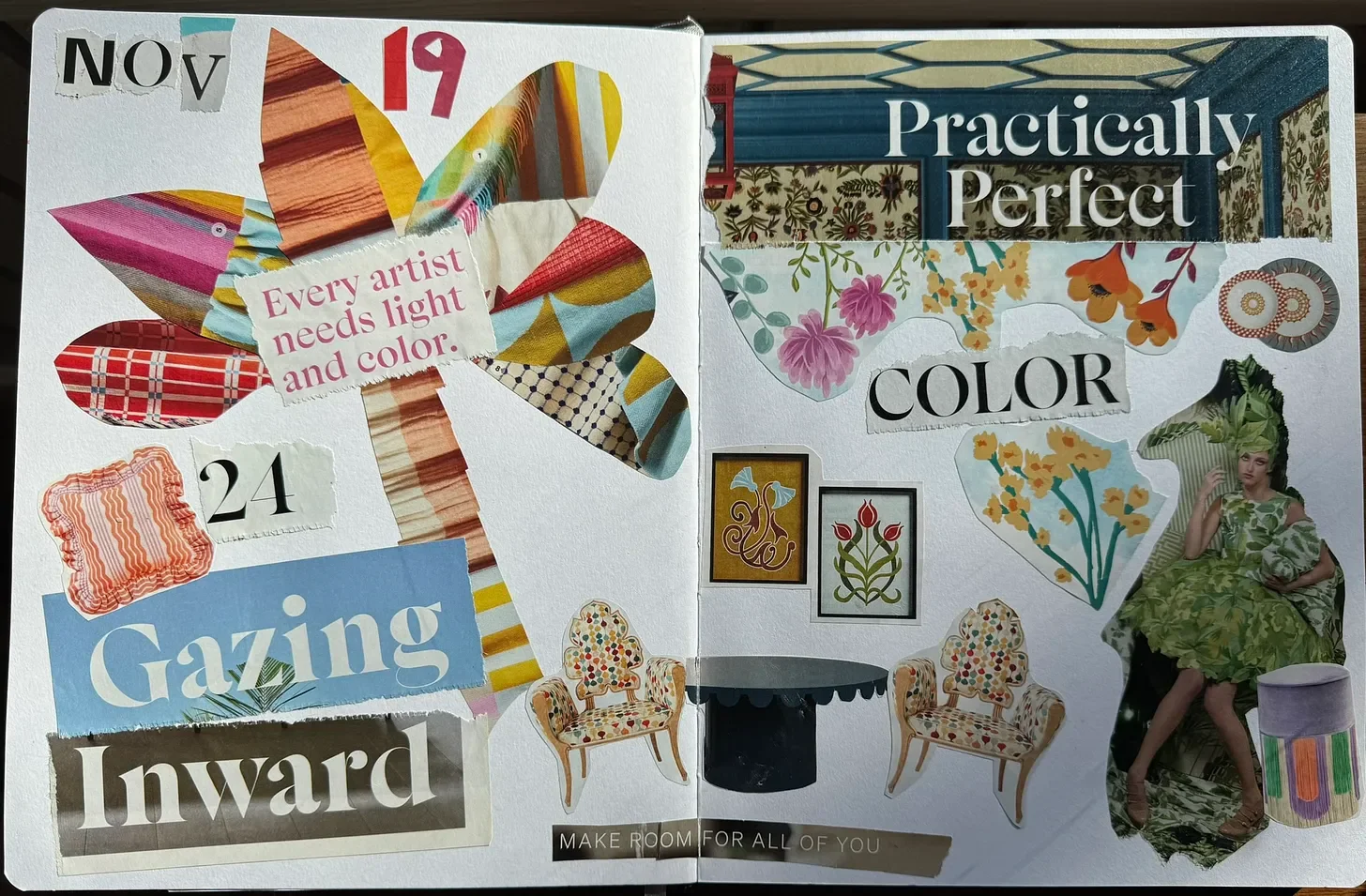
Created with a sense of playfulness. The focus was on process not product.
4. What about scissors?
Scissors are optional. Seriously! Tearing paper works just as well—sometimes better. I use a metal ruler to tear pages from magazines and books because I like rough edges.
There are no rules. Scissors, utility knives, or tearing all work.
Collage + Mixed Media
Mixed media helps unify a collage.
Easy ways to add cohesion:
• watercolor or painted backgrounds
• pencil or colored-pencil outlines
• hand lettering
• stencils for texture
• acrylic markers for contrast
I often start with watercolor so I’m not facing a blank white page. I also keep an old dictionary to use up leftover paint. Gelli plate printing is another great way to create one-of-a-kind papers.
The piece above has more white space and feels less cohesive than the one below, where colored-pencil outlines tie everything together. I’m still finding my collage voice. I share my process because all we ever have is the moment we’re in.
Making collage and mixed-media art feels good on a soul level. It doesn’t matter if anyone else likes it. I need to create. And that is enough.
Join me January 10, 2026 for an in-person workshop. (If you are finding this after the event, then look for the next ART LAB.)
Let’s Play!
ART LAB is a creative gathering for adults in recovery—a place to slow down, make art, and connect. The Jan. 10, 2026 workshop is free thanks to partnerships with New Form, Addiction Prevention Coalition, and C3—The Moore Institute.
Check out these super cool Collage Videos on YouTube:
How to make collage | IN THE STUDIO
Jenny Grevatte | Drawing with Scissors
Watch this for collage inspiration | 15 whimsical surreal collages in 15 minutes
Analogue Collage | Art for Quiet Days
Get unstuck with this art exercise - Grid journaling to beat artist’s block